Save HIV Funding Leaders Honored at OUT100, Talk PrEP Access with GMA
Jeremiah Johnson and Maxx Boykin spotlight the personal stakes of HIV prevention and healthcare access as the campaign pushes for full federal HIV funding.
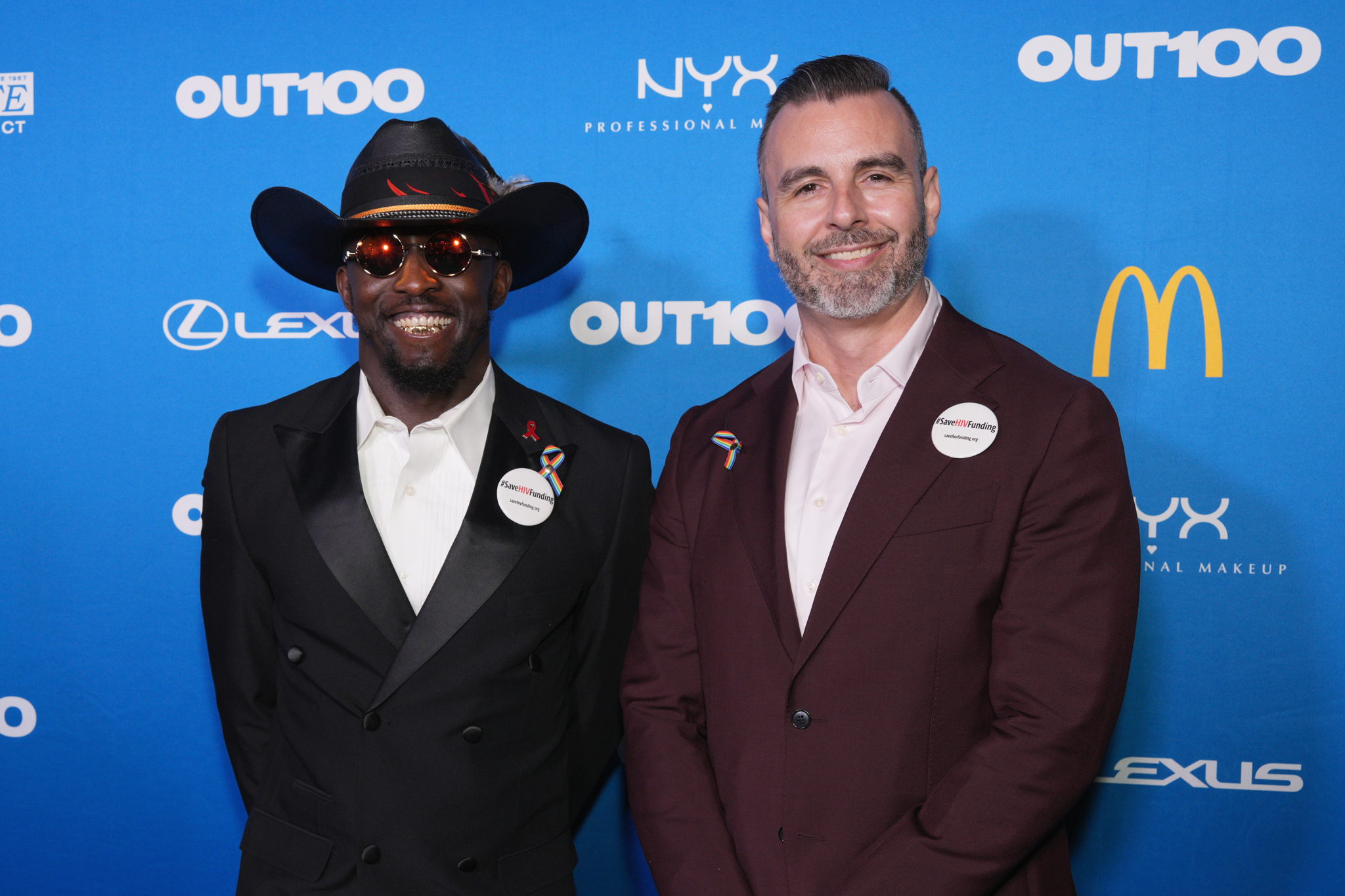
LOS ANGELES, CA — MONDAY, NOVEMBER 16, 2026 — Leadership from Save HIV Funding, the national campaign advocating for federally funded HIV prevention, treatment, care and research, was honored on this year’s OUT100 list and spoke with Good Morning America about the importance of expanding HIV prevention and healthcare access. Co-founder Jeremiah Johnson and Campaign Manager Maxx Boykin were recognized as OUT100 Groundbreakers at the OUT 100 Gala for their campaign leadership.
Since launching in 2023, the Save HIV Funding campaign has successfully fought to defeat $3.5 billion in proposed federal HIV funding cuts, including nearly $2 billion in proposed cuts for FY2026 alone. Through congressional advocacy, nationwide organizing, and its #CutsKill Quilt demonstrations, the campaign has brought the human consequences of funding decisions into the national conversation. It is now pushing to fully fund HIV prevention, treatment and research for FY2027.
Speaking with GMA on the gala’s red carpet, Johnson shared how his experience living with HIV since his diagnosis in 2008 drives his work at PrEP4All and his commitment to expanding prevention access.
“I don’t want to see anybody else being diagnosed unnecessarily,” Johnson said.

Boykin, a PrEP user and proud member of the PrEP Users Union, emphasized empowering people to understand their healthcare access and speak directly with legislators. His message connected the personal benefits of PrEP access with the broader work of ensuring communities can advocate for the care they need.
“We want to make sure that we get more people on PrEP,” Boykin said, “but also making sure that they understand the access that they have.”
Together, their remarks underscored the connection between personal experience, community organizing and federal policy. For Johnson and Boykin, expanding access means ensuring people have both the tools to protect their health and a voice in the decisions that shape healthcare across the country.
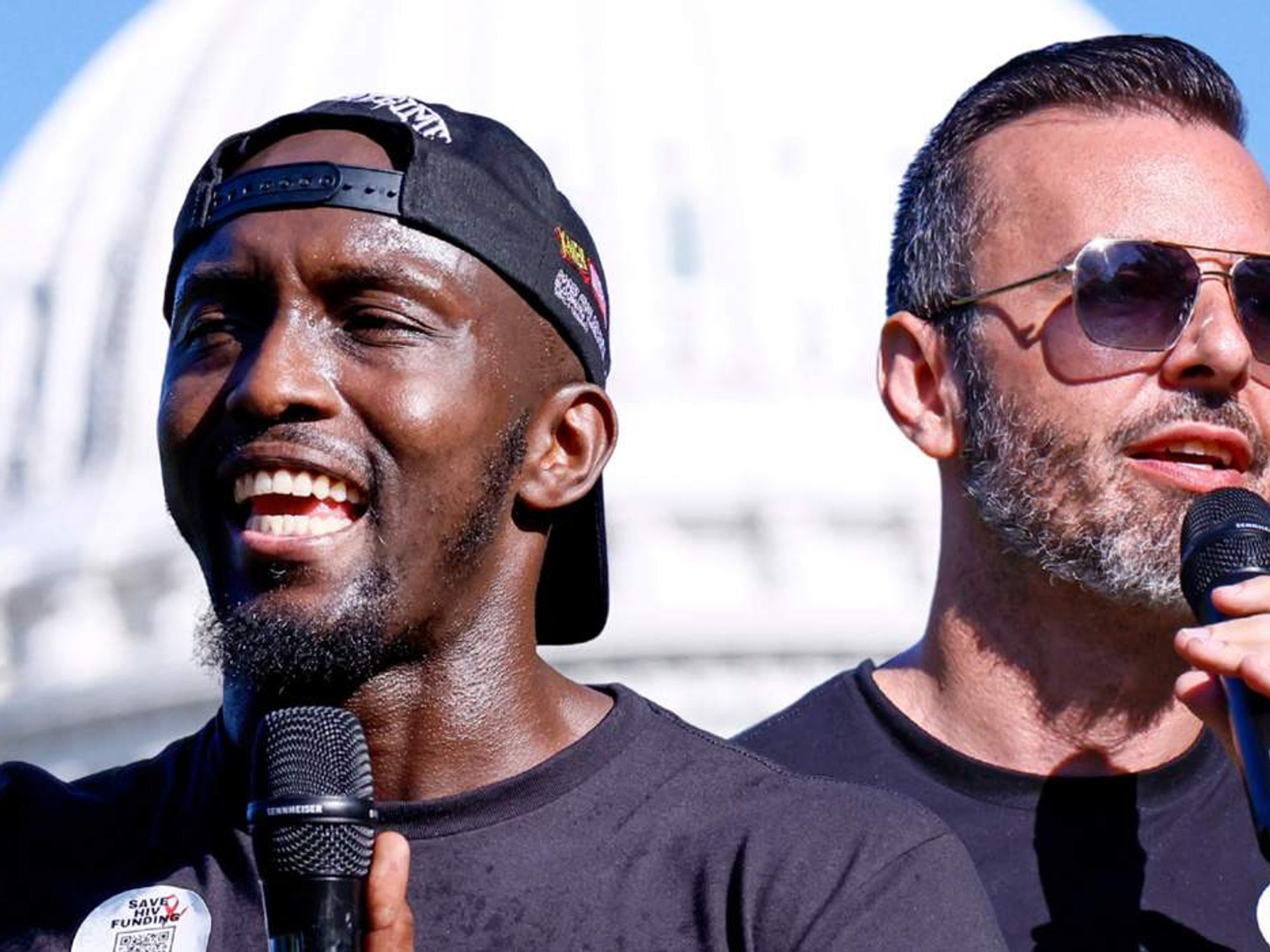
Their OUT100 recognition highlights the work of a campaign that has mobilized against proposed federal HIV funding cuts through direct engagement with Congress, organizing across the country and public demonstrations. The campaign’s #CutsKill Quilt demonstrations put the human consequences of funding decisions at the center of its advocacy, bringing the experiences of people living with HIV directly into the national conversation.
As the fight for FY2027 funding continues, Save HIV Funding is calling for sustained investment across HIV prevention, treatment, care and research. The campaign’s message is clear: progress depends on ensuring that the people and communities who need these services can access them.
WATCH: Jeremiah Johnson and Maxx Boykin speak with GMA
READ: Jeremiah Johnson and Maxx Boykin — 2026 Out100 Groundbreakers

PHOTOS: Courtesy Presley Ann/Getty Images for Out.com/equalpride


HIV FUNDING FAST FACTS
The following background fact sheet provides additional context on the funding pressures facing HIV services and the stakes of continued advocacy after USCHA.
- Global HIV/AIDS Funding Under Attack: Advocates successfully turned back $400M in proposed cuts to PEPFAR as part of a larger attack on international assistance programs in the recissions bill passed by Congress in July 2025. Despite this success, changes implemented unilaterally by the Administration have severely compromised the program, including the elimination of HIV prevention funding for several key populations and replacing existing transparent and highly effective country and regional operations planning with clandestine bilateral contractual negotiations that undermine lifesaving implementation strategies for people living with HIV and seek to extract trade, data, and other unrelated concessions from member countries.
- AIDS Drug Assistance Programs in Crisis: After years of flat federal funding in the midst of rapidly increasing healthcare costs, 15 state ADAP programs recently reported deficits in the current fiscal year, and 2 ADAPs reported active waiting lists – threatening medication access for thousands of Americans.
- Federal HIV programs have more than 35 years of bipartisan support: In 2003, President George W. Bush created PEPFAR (the President’s Emergency Plan for AIDS Relief), which has saved 25 million lives worldwide. Domestically, Bush signed reauthorizations of the Ryan White CARE Act, expanding federal support for HIV care. Congress has passed bipartisan appropriations bills to fund these programs each year. Protecting HIV funding has historically been a bipartisan commitment to people living with HIV, public health, health care access, and global security.
- Federal HIV programs are cost-effective: Every $1 invested in HIV prevention saves the health care system $3 to $7 in future treatment costs. Cuts would increase long-term spending.
- Medicaid is the largest source of coverage for people with HIV in the U.S., covering roughly 40% of people living with HIV. Medicaid expansion has been associated with a 33% increase in PrEP prescriptions. Cuts to HIV discretionary funding would compound the negative impact of recent Medicaid cuts that have begun to limit access to health coverage and care for people with low incomes.
- HIV care is part of the U.S. health care system: Federal HIV funding supports access to preventive care, primary care, mental health services, housing, and medications. Cutting these funds would destabilize programs millions of people depend on — including those living with chronic conditions, low-income families, and uninsured people.
- Over 1.2 million people are living with HIV, and over 500,000 rely on federal programs like the Ryan White HIV/AIDS Program for lifesaving medication and care.
- HIV prevention funding protects everyone: The federal government funds access to PrEP (pre-exposure prophylaxis), a daily medication that reduces the risk of HIV by 99%. Rolling back funding would increase new HIV cases and long-term costs to the health care system.
- HIV funding is about more than one disease: These programs create a blueprint for coordinated, federally funded responses to health crises — from the opioid epidemic to COVID-19. Gutting HIV funding would weaken America’s preparedness for future public health threats.
- HIV funding protects vulnerable communities: Black and Latine communities account for more than 65% of new HIV diagnoses. Protecting these funds protects racial and health equity.
Additional State-by-State Resources & Fact Sheets

About the Save HIV Funding Campaign:
Launched in 2023 by PrEP4All, AVAC, and the HIV Medicine Association in partnership with the Federal AIDS Policy Partnership, the Save HIV Funding Campaign is a national coalition supported by more than 150 organizations representing advocates, healthcare providers, researchers, and community leaders. The campaign was formed in response to proposed Congressional cuts to federal HIV programs and has since helped avert more than $3.5 billion in domestic HIV funding cuts. Through coordinated advocacy, media engagement, and community mobilization, Save HIV Funding works to place the future of HIV prevention and care squarely in the national conversation. The campaign convenes community health providers and advocates across the country, organizes bipartisan congressional engagement, and mobilizes public voices to ensure that lifesaving HIV programs remain strong, accessible, and fully funded for the communities that rely on them.