TIMES SQUARE PROCLAMATION RECOGNIZES JULY 17 AS NATIONAL HIV PREVENTION DAY IN MANHATTAN
Annual observance established by PrEP4All in 2018 receives official civic recognition as public health leaders warn that unprecedented domestic and global threats could undermine decades of progress against HIV
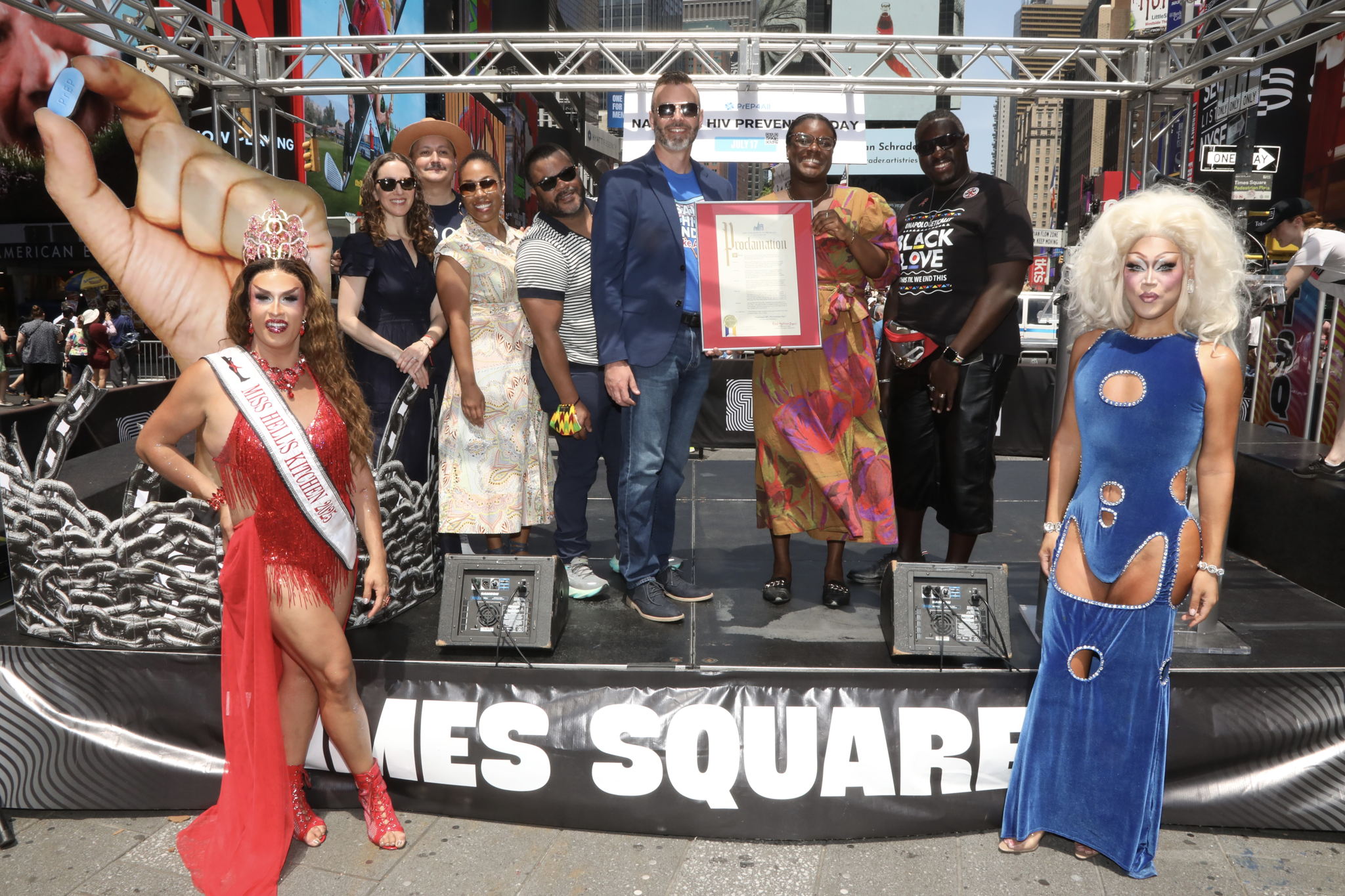
NEW YORK, NEW YORK – FRIDAY, JULY 17, 2026 — PrEP4All, the national nonprofit organization focused on expanding access to HIV prevention and creating a national, federally funded PrEP program, today announced National HIV Prevention Day as officially recognized in the Borough of Manhattan following the presentation of an official proclamation from the Office of the Manhattan Borough President. The event took place during PrEP4All's flagship public awareness event in Times Square in collaboration with Times Square Alliance and Times Square Live. The proclamation marked a significant milestone for the annual observance, established by PrEP4All in 2018 to advance the belief that HIV prevention is a human right and that every person deserves equitable access to lifesaving HIV prevention services, medications, and care.
The observance highlights both the extraordinary progress made in HIV prevention and the urgent work that remains to ensure everyone can access lifesaving prevention tools, including pre-exposure prophylaxis (PrEP), HIV testing, sexual health services, harm reduction, and community-based prevention programs. It also comes a day after community advocates received word that the Trump Administration intends to divert over $200 million in HIV prevention funds intended for community-based organizations.
This year's National HIV Prevention Day arrives at a pivotal moment. Scientific breakthroughs—including daily oral PrEP, long-acting injectable PrEP, and emerging prevention technologies—have made ending the HIV epidemic more achievable than ever before. PrEP is over 99% effective at helping people avoid getting HIV, and it has revolutionized millions of lives and transformed communities. Yet proposed cuts to HIV prevention funding in the United States and the dismantling of prevention infrastructure around the world threaten to reverse decades of public health progress and deepen longstanding health inequities.
Today's public awareness event in Times Square brought together government leaders, public health officials, advocates, artists, and community members to recognize National HIV Prevention Day, celebrate the power of HIV prevention, and renew a collective commitment to ensuring every person has equitable access to the tools and care needed to prevent HIV.
Featured speakers included: Jeremiah Johnson, Executive Director of PrEP4All & co-founder of the Save HIV Funding Campaign; John Meade, Board Member of PrEP4All, Dr. Oni Blackstock, Founder and Executive Director of Health Justice; Sarah Braunstein, Assistant Commissioner of Health for the Bureau of Hepatitis, HIV, and Sexually Transmitted Infections at the New York City Department of Health and Mental Hygiene; and Miesha Smith, Deputy Manhattan Borough President, who delivered the Proclamation on behalf of Manhattan Borough President Brad Hoylman-Sigal. The program was hosted by reigning Miss Hell’s Kitchen, Freeda Kulo, and concluded with a moving performance of “Nessun Dorma” by internationally acclaimed Juilliard-trained opera singer and drag entertainer Jasmine Rice LaBeija.
Photos by: Jeff Eason — with more stills being released next week


Speaker Quotes
Jeremiah Johnson, Executive Director, PrEP4All said in part: We refuse to accept HIV prevention programs that are limited in scale and response for the needs in our communities. We are aggressively fighting efforts to undermine insurance coverage for PrEP. And we are fighting for a National PrEP program that would eliminate cost as a barrier, regardless of your insurance status.
Miesha Smith, Deputy Manhattan Borough President, said in part:
Despite extraordinary scientific advances, inequities and access to HIV prevention persist in New York City and across the nation, with too many individuals continuing to face barriers to PrEP, HIV testing, harm reduction services and comprehensive sexual healthcare.
John Meade, Board Member, PrEP4All, said in part: Prevention is not charity. It is not a line item to be traded away. It is a promise — a promise this country made, and a promise the world answered by trusting us with their trials, their data, their lives. We do not break promises like that quietly.
Dr. Oni Blackstock, Founder and Executive Director, Health Justice, said in part: We must compel the government to protect what’s already ours and to build what we still need.
Sarah Braunstein, Assistant Commissioner of Health, Bureau of Hepatitis, HIV, and STIs, New York City Department of Health and Mental Hygiene, said in part: Stark disparities persist in how New Yorkers are affected by HIV. Among people newly diagnosed in 2024, fully 86% were Black or Latino; among women newly diagnosed, 91% were Black or Latina.
A Critical Moment for HIV Prevention
National HIV Prevention Day comes amid mounting concern over the future of HIV prevention infrastructure both domestically and globally.
Despite unprecedented scientific breakthroughs—including PrEP options that reduce the risk of acquiring HIV through sex by more than 99 percent and new long-acting formulations that require as few as two doses each year—many of the public health systems responsible for delivering prevention services face significant uncertainty.
Advocates continue to urge policymakers to fully fund HIV prevention programs, strengthen community-based prevention infrastructure, and establish a federally funded National PrEP Program to ensure every person who could benefit from HIV prevention can access it, regardless of insurance status, income, or geography.
In a statement provided to PrEP4All, Representative Bonnie Watson Coleman said: Health care is a human right, and that includes HIV prevention. Earlier this year, I reintroduced the PrEP Assistance Program Act, which would provide grants to cover preventative medication costs, clinic and testing fees, physician visits, and community outreach programs. Due to gaps in funding, miseducation, and lack of awareness, too many Americans don't have access to the medication and treatment— especially in communities of color. I’m proud to work with advocates and community leaders to end these disparities. Today, as we commemorate National HIV Prevention Day, I’m calling on all of us to do the right thing and build a future where everyone has access to the tools that make prevention possible.
Global Prevention Systems Under Pressure
The consequences of declining investment in HIV prevention are already being felt worldwide.
Among PEPFAR-supported programs:
- PrEP enrollment has declined by 42 percent
- Spending on condoms and lubricants has declined by 93 percent
- HIV testing has declined from 21.9 million people to 17.2 million people, representing a 21.4 percent decrease
Beyond biomedical prevention, many evidence-based structural prevention programs have also been eliminated or significantly reduced, including initiatives addressing gender-based violence, protecting the human rights of criminalized communities, supporting girls' education, and expanding economic opportunities for young women and other key populations.
"We are facing a global prevention crisis, exacerbated by the Trump administration's decimation of lifesaving prevention programs across sub-Saharan Africa," said Asia Russell, Executive Director of Health GAP. "We demand the immediate reconstruction of evidence-based prevention serving marginalized and criminalized communities, including young women and girls, LGBTQI+ people, sex workers, people in detention, and people who use drugs."
Domestic HIV leaders echoed those concerns while emphasizing that today's scientific advances make expanded investment—not retrenchment—the clearest path toward ending the epidemic.
"As we mark National HIV Prevention Day, there is much to be hopeful about. Today, we have highly effective pre-exposure prophylaxis (PrEP) options—from a daily pill to a twice-yearly injection—that have the potential to dramatically alter the course of the HIV epidemic," said Anna K. Person, MD, FIDSA, Chair of the HIV Medicine Association (HIVMA).
"That hope is tempered by calls to eliminate federal funding for HIV prevention and by threats to the sustainability of the community-based programs that are essential to ensuring HIV prevention services reach the people who could benefit most. At a moment when we have the tools to prevent new HIV transmissions, we need to expand rather than erode the systems and programs that make those tools accessible.
"HIVMA urges policymakers to fully fund HIV prevention programs and establish a National PrEP Program to ensure everyone who could benefit from PrEP can access it and to help realize the full promise of HIV prevention."
Manhattan Borough Proclamation Text
WHEREAS, the Borough of Manhattan has long stood at the forefront of the response to HIV/AIDS, carrying the pain of profound loss while demonstrating extraordinary resilience, activism, scientific innovation, and public health leadership; and
WHEREAS, generations of advocates, healthcare workers, researchers, policymakers, and people living with and affected by HIV transformed grief into action, changing the course of public health and bringing the world closer than ever before to ending the HIV epidemic; and
WHEREAS, despite extraordinary scientific advances, inequities in access to HIV prevention persist in New York City and across the nation, with too many individuals continuing to face barriers to PrEP, HIV testing, harm reduction services, and comprehensive sexual health care; and
WHEREAS, National HIV Prevention Day was established in 2018 by PrEP4All, the national nonprofit organization focused on expanding access to HIV prevention and creating a national, federally funded PrEP program, to affirm that HIV prevention is a human right and that everyone deserves equitable access to the lifesaving tools that make ending the HIV epidemic possible; and
WHEREAS, New York has led the nation in advancing access to HIV prevention, including protections that help ensure New Yorkers can obtain PrEP without unnecessary cost-sharing or insurance barriers, while recognizing that millions of Americans continue to face obstacles to accessing lifesaving prevention services; and
WHEREAS, at a time when proposed reductions in federal funding threaten HIV prevention programs and the public health infrastructure that communities rely upon, continued investment in prevention, care, research, and harm reduction remains essential to ending the HIV epidemic; and
WHEREAS, National HIV Prevention Day reminds us that prevention is an act of hope, that public health is strengthened when communities work together, and that every person deserves the opportunity to live a healthy life free from HIV;
NOW, THEREFORE, I, Brad Hoylman-Sigal, Borough President of Manhattan, do hereby proclaim July 17, 2026, as NATIONAL HIV PREVENTION DAY in the Borough of Manhattan, and encourage all Manhattanites to honor those who brought us to this moment, celebrate the progress made possible through science and community, call upon local, state, and federal leaders to fully invest in HIV prevention and public health, and recommit ourselves to expanding equitable access to HIV prevention for all.
About National HIV Prevention Day
National HIV Prevention Day, established by PrEP4All in 2018 and observed annually on July 17, is a national call to action to ensure equitable access to HIV prevention for all. Created alongside PrEP4All's campaign for a federally funded National PrEP Program, the observance advances the belief that HIV prevention is a human right and advocates for the investments, policies, and public health systems needed to end the HIV epidemic.
About PrEP4All
PrEP4All is a national advocacy organization founded in 2018 and led by patients, healthcare professionals, and policy experts working to expand access to lifesaving HIV prevention and treatment. Grounded in lived experience and inspired by the legacy of ACT UP, PrEP4All uses direct action, media, and policy advocacy to lower drug costs and advance a national strategy to end the HIV epidemic in the United States.